In California, the safety habits a cyclist follows, from signaling turns to using proper lights, can help show that the rider acted reasonably if a driver later tries to shift blame after a crash. If a collision does occur, a bicycle accident lawyer can use that same evidence to counter comparative negligence arguments and build a stronger claim.
The top 10 tips for bike safety that also protect your legal claim include using front and rear lights, signaling every turn, wearing a helmet, riding with traffic, claiming your lane when needed, staying out of the door zone, using a mirror, avoiding headphones, documenting rides with a camera, and planning routes that prioritize protected infrastructure. These tips do more than reduce crash risk. They can also make it harder for an insurance company to argue that the cyclist helped cause the collision.
Table of Contents
- Key Takeaways: Bike Safety Tips for Urban Riders in San Diego
- 1. Use Front and Rear Lights to Stay Visible in Traffic
- 2. Signal Every Turn and Lane Change
- 3. Wear a Helmet Even When California Law Does Not Require One
- 4. Ride With Traffic and Obey All Traffic Signals
- 5. Take the Lane When It Is Unsafe for a Car to Pass
- 6. Stay Out of the Door Zone
- 7. Use a Mirror to Monitor Traffic Behind You
- 8. Eliminate Distractions So You Can Hear and React
- 9. Use a Bike Camera to Record Dangerous Driver Behavior
- 10. Choose Routes With Protected Bike Lanes and Lower Traffic
- How Insurance Companies Use Safety Gaps to Argue Comparative Negligence
- Why Defensive Cycling Strategies Can Strengthen a Bicycle Accident Claim
- FAQs for Bike Safety and Legal Protection in San Diego
- Talk to a San Diego Bicycle Accident Attorney About Protecting Your Claim
Key Takeaways: Bike Safety Tips for Urban Riders in San Diego
- Every safety practice a cyclist follows creates evidence of reasonable care that may counter comparative negligence arguments after a collision
- California law requires specific bicycle safety gear, including lights, reflectors, and brakes, and noncompliance may give insurers leverage to reduce a claim
- Defensive cycling strategies like predictable lane positioning, consistent signaling, and avoiding the door zone serve both safety and legal purposes
- San Diego's mix of bike lanes, sharrow markings, and unprotected corridors makes defensive riding habits especially important in neighborhoods like Pacific Beach, North Park, Hillcrest, and downtown
- A cyclist who can demonstrate compliance with California traffic laws at the time of a crash is in a stronger position to hold a negligent driver fully accountable
1. Use Front and Rear Lights to Stay Visible in Traffic
California Vehicle Code Section 21201 requires a white front light visible from 300 feet and a red rear reflector or light visible from 500 feet during darkness. The law defines darkness as the period from 30 minutes after sunset to 30 minutes before sunrise, or any time visibility drops below 1,000 feet.
Meeting the legal minimum matters, but going beyond it can improve both visibility and credibility after a crash. Running a front and rear light during daylight hours, particularly on overcast mornings or along shaded corridors, makes the cyclist more visible to drivers and eliminates the "I didn't see them" defense before it begins.
2. Signal Every Turn and Lane Change
California law requires cyclists to signal turns and lane changes when other traffic may be affected. California Vehicle Code Section 22111 explains how those hand signals are given:
- A left turn is signaled by extending the left hand horizontally
- A right turn may be signaled by extending the right hand horizontally to the right side of the bicycle
- A stop or decrease in speed is indicated by extending the hand downward
Consistent signaling communicates intent to drivers and creates a pattern of predictable behavior. In a collision, a cyclist who can show they signaled before changing position has a stronger footing against a driver who claims the cyclist "came out of nowhere" or moved unpredictably.
3. Wear a Helmet Even When California Law Does Not Require One
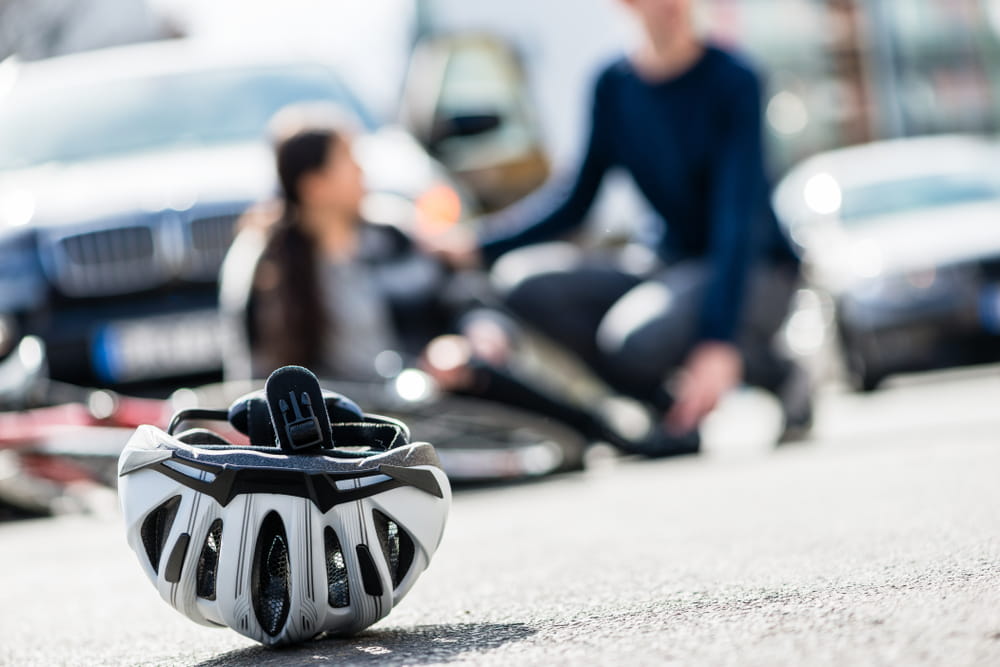
California Vehicle Code Section 21212 requires helmets only for riders under 18. Adults may legally ride without one.
However, the absence of a helmet after a head injury gives an insurer a powerful argument that the cyclist's own choices contributed to the severity of the harm, which may reduce the compensation awarded. Insurance companies may argue that the lack of a helmet contributed to the severity of the injury, reducing the amount they pay out.
For San Diego commuters riding in heavy traffic, a helmet is both basic protection and one less argument for an insurer to use after a head injury.
4. Ride With Traffic and Obey All Traffic Signals
Under California Vehicle Code Section 21200, cyclists have the same rights and obligations as motor vehicle drivers. That means stopping at red lights and stop signs, yielding to pedestrians, and riding in the direction of traffic flow. CVC 21650.1 requires bicycles to operate in the same direction as vehicles on a roadway.
Running a stop sign or riding against traffic undermines a cyclist's legal credibility if a collision occurs. Even if the driver was primarily at fault, evidence of a traffic violation by the cyclist gives the insurer a foothold to argue shared responsibility under California's comparative negligence system.
5. Take the Lane When It Is Unsafe for a Car to Pass

If a travel lane is too narrow to safely share side by side with a motor vehicle, a cyclist may ride near the center of the lane to prevent unsafe passing. This is legal under CVC 21202, which requires cyclists to ride as far right as "practicable," not as far right as physically possible.
Taking the lane on narrow streets can prevent unsafe passes by drivers who do not leave the three feet of clearance California law requires.
In San Diego neighborhoods like North Park and Hillcrest, where parked cars line both sides of the street and travel lanes are narrow, riding too far right actually increases the risk of both dooring and sideswipe collisions.
6. Stay Out of the Door Zone
California Vehicle Code Section 22517 places the legal duty on anyone opening a vehicle door to check for approaching traffic. But legal protection does not prevent the collision itself. Riding at least three to four feet from parked cars, when traffic conditions allow, reduces the risk of a dooring crash.
In San Diego's Gaslamp Quarter, Little Italy, and East Village, heavy rideshare traffic creates unpredictable door-opening patterns. Passengers exiting Uber and Lyft vehicles often have no habit of checking for cyclists. Maintaining distance from parked and stopped vehicles is one of the most effective ways to avoid a dooring collision in these corridors.
7. Use a Mirror to Monitor Traffic Behind You
California law does not require a mirror on a bicycle, but adding one is a defensive cycling strategy that pays dividends in both safety and legal positioning. A handlebar or helmet-mounted mirror helps cyclists monitor traffic behind them without making repeated shoulder checks that can disrupt balance.
In a collision involving a vehicle approaching from behind, a cyclist who uses a mirror may be able to demonstrate awareness of surrounding traffic and show that the crash was not caused by a sudden, unpredictable movement on the cyclist's part.
8. Eliminate Distractions So You Can Hear and React
California Vehicle Code Section 27400 prohibits cyclists from wearing earbuds or headphones in both ears while riding on a roadway. A single earbud is permitted, but riding with both ears covered eliminates the ability to hear approaching vehicles, horns, or emergency sirens.
Beyond the legal requirement, avoiding distractions while riding preserves the cyclist's ability to react to changing road conditions. It also removes a potential argument that the cyclist was inattentive at the time of a collision.
9. Use a Bike Camera to Record Dangerous Driver Behavior
A front-facing or rear-facing camera mounted on the handlebars or helmet captures real-time footage of road conditions, driver behavior, and the cyclist's own conduct. In the event of a collision, camera footage may provide direct evidence of how the crash occurred, who violated which traffic law, and whether the cyclist was riding safely and predictably.
Camera footage can counter the common tendency to interpret a bicycle crash from the driver's point of view rather than the cyclist's. Video evidence shifts that framing by showing the collision from the cyclist's point of view.
10. Choose Routes With Protected Bike Lanes and Lower Traffic

San Diego's cycling infrastructure varies dramatically from one block to the next. A cyclist commuting through Pacific Beach may ride a buffered bike lane on one stretch and encounter nothing but a sharrow marking on the next. Choosing routes with protected bike lanes, dedicated paths, or lower-traffic streets reduces exposure to the most common collision types: right hooks, left crosses, dooring, and rear-end crashes.
Route planning also helps show that a cyclist was trying to ride as safely as possible. A cyclist who consistently chooses safer infrastructure demonstrates a pattern of reasonable care. If a collision occurs on a corridor with known hazards, the cyclist's decision to use that route may be less vulnerable to challenge when the evidence shows they routinely prioritized safer alternatives.
How Insurance Companies Use Safety Gaps to Argue Comparative Negligence
California's pure comparative negligence system allows an injured cyclist to recover compensation even when partially at fault, but every percentage point of fault attributed to the cyclist reduces the recovery. Insurance companies and defense attorneys rely on a predictable set of arguments to shift blame onto injured riders.
Common arguments include:
- Claiming the cyclist was not visible enough to the driver, particularly in low-light conditions
- Arguing the cyclist moved unpredictably or failed to signal before changing position
- Pointing to the absence of a helmet to attribute greater responsibility for the severity of a head injury
- Suggesting the cyclist was distracted by headphones or a phone
- Questioning the cyclist's route choice or lane positioning as evidence of risk-taking behavior
Each of these arguments targets a gap in the cyclist's safety habits. When those gaps do not exist, the arguments lose traction and the focus shifts to where it belongs: the driver's conduct.
Why Defensive Cycling Strategies Can Strengthen a Bicycle Accident Claim
A cyclist who consistently follows the 10 practices above neutralizes each of those insurer arguments before they gain traction. The habits that matter most from a legal standpoint are the ones that leave a documented trail:
- Lights and reflectors that meet or exceed CVC 21201 requirements eliminate visibility disputes
- Consistent hand signaling under CVC 22111 counters claims of unpredictable movement
- Camera footage captures the cyclist's behavior and the driver's conduct in real time
- A helmet removes the severity-of-injury argument entirely
- Route history showing a pattern of choosing safer infrastructure demonstrates ongoing reasonable care
The fewer facts an insurer can point to as careless riding, the harder it becomes to reduce the cyclist's claim. Defensive cycling is not just a safety habit. It is the foundation of a well-protected legal position.
FAQs for Bike Safety and Legal Protection in San Diego
What bicycle safety gear does California law actually require?
Under CVC 21201, every bicycle must have a brake capable of making one wheel skid on dry pavement. For riding during darkness, the law requires a white front light visible from 300 feet, a red rear reflector or light visible from 500 feet, white or yellow pedal or ankle reflectors visible from 200 feet, and side reflectors on both the front and rear halves of the bicycle. Helmets are required only for riders under 18 under CVC 21212.
Does taking the lane make me look at fault in a
Taking the lane is lawful under CVC 21202 when the travel lane is too narrow to safely share with a motor vehicle. Rather than suggesting fault, riding near the center of a narrow lane may actually demonstrate reasonable care by preventing a driver from attempting an unsafe pass with less than three feet of clearance.
Does wearing a helmet affect my legal claim if I am hit by a car?
California does not require adults to wear helmets, so the absence of one does not bar a claim. However, if a head injury occurs, the defense may argue that a helmet would have reduced the severity of the injury, potentially reducing compensation under comparative negligence.
Can a driver be held liable if I was not using bike lights at night?
The driver may still be liable if their negligence caused the crash. However, riding without the lights and reflectors required by CVC 21201 may give the insurer grounds to argue that the cyclist contributed to the collision by being less visible.
Is it legal to ride on the sidewalk in San Diego?
California law does not prohibit sidewalk riding statewide, but local ordinances may restrict it. San Diego's municipal code limits sidewalk riding in certain areas. Riding on the sidewalk may also complicate a legal claim if a collision occurs at a driveway or intersection, where drivers may not expect a cyclist approaching from a sidewalk.
What should I do if a driver passes me with less than three feet?
Under CVC 21760, drivers must provide at least three feet of clearance when passing a cyclist. If a close pass results in contact or forces an evasive maneuver that causes a crash, the violation may support a negligence claim. Documenting the incident with camera footage strengthens the evidence.
Talk to a San Diego Bicycle Accident Attorney About Protecting Your Claim

Safety habits protect more than a cyclist's body. They protect the legal claim that follows when someone else's negligence causes a crash. Every light, signal, helmet, and camera creates a piece of evidence that an attorney may use to counter comparative negligence arguments and hold the at-fault driver accountable.
Bonnici Law Group represents injured cyclists across San Diego and Orange County and understands how defensive riding translates into stronger legal outcomes. Contact us for a free consultation.