San Diego police and safety organizations are running specific Planning and Enforcement Operations through September 2026. These grant-funded initiatives target high-risk behaviors like speeding, failure to yield, and red light running in areas with a documented history of severe crashes.
If you were injured in a zone targeted by these operations, this context matters. The heightened police presence, the deployment of automated cameras, and the pre-existing traffic safety audits generate a trail of evidence that significantly influences how liability is determined and how insurance investigations proceed.
For an injured cyclist or pedestrian, the police report for your accident may be more detailed than usual if it occurred during an operation. Additionally, there may be existing public records proving the city knew the intersection was dangerous long before your accident happened.
If you were injured in a pedestrian or bicycle accident in San Diego, call Bonnici Law Group today. We will review the police report and cross-reference it with recent safety audit data to see if there is any data that strengthens your case.
Table of Contents
- Key Takeaways for Enforcement Operations
- What Are San Diego's Enforcement and Education Operations?
- The Data Behind the Crackdown: Why Enforcement Is Escalating
- Automated Enforcement Systems and the Safer Streets Act
- How Safety Audits Can Become Evidence in Your Case
- FAQ for San Diego Pedestrian Safety Operations
- Enforcement Data Is Just the Starting Point for Your Claim
Key Takeaways for Enforcement Operations
- Enforcement operations create usable evidence. Police reports and audit data from these zones can prove the driver's negligence or the city's knowledge of dangerous conditions.
- Real-time data combats bias. Objective data from cameras and black boxes helps refute claims that a pedestrian or cyclist was at fault.
- Time is a factor for evidence. You must act quickly to secure camera footage or audit records before they are destroyed or archived.
What Are San Diego's Enforcement and Education Operations?
To understand how these operations affect a personal injury case, we must look at what is actually happening on the street. San Diego enforcement operations refer to specific actions funded by the California Office of Traffic Safety (OTS).
In November 2025, the SDPD received specific grants to fund these operations through September 2026. This money pays for overtime hours, specialized equipment, and data analysis, which shifts the police focus from general patrol to targeted intervention.
High-Visibility Enforcement
When the OTS funds high-visibility enforcement, it changes the physical landscape of the road. You might see:
- Saturation Patrols: This is a concentration of officers in high-injury corridors looking specifically for violations that endanger vulnerable road users. They are looking for drivers turning right on red without stopping, or vehicles encroaching on bike lanes.
- DUI Checkpoints: These are frequently integrated into the safety operations. Impaired drivers disproportionately kill pedestrians, so checkpoints serve as a physical barrier to entry for drunk drivers in high-traffic pedestrian zones.
- Pedestrian Decoy Operations: This is a proactive tactic where plainclothes officers cross streets in marked crosswalks to cite drivers who fail to yield. If you were hit in an area where these decoys are used, it proves the police are aware that drivers in that specific spot are habitually negligent.
The Education Aspect
The grants also fund non-punitive measures. Groups like Circulate San Diego conduct walking field trips for seniors and helmet distributions. While this seems unrelated to a lawsuit, it establishes a baseline of what "reasonable behavior" looks like.
If a driver ignores these well-publicized standards, their negligence becomes harder for an insurance adjuster to excuse.
The Data Behind the Crackdown: Why Enforcement Is Escalating

These operations are a direct response to a statistical reality that has become impossible to ignore. In one recent year, California saw 167 traffic fatalities specifically from red light running and signal violations. This data drives the funding.
When a city accepts millions of dollars to fix a problem, they are legally admitting the problem exists. This admission is evidence in a legal claim.
Disproportionate Risk
While red light running is dangerous for other cars, pedestrians and cyclists bear the brunt of the resulting damage. A driver protected by airbags and steel might walk away from a signal violation crash, but a pedestrian in the crosswalk will not.
This disparity helps explain why the Vision Zero policy exists. San Diego's goal is zero traffic fatalities. To achieve this, the city explicitly schedules audits and enforcement events—like the April 2026 audit with UCSD planners—because previous data identified these streets as high-injury networks.
Legal Implication
Knowing this data should prevent accidents, but since accidents still happen, this data serves a secondary purpose: context.
If a driver hits you on a street marked for Vision Zero improvements, it suggests the risk was foreseeable. The driver entered a zone known for danger, likely marked with heightened enforcement, and still failed to drive safely. This heightens the degree of their negligence.
Automated Enforcement Systems and the Safer Streets Act
A major component of the current planning strategy involves technology. We must address cameras because this is a rapidly changing area of law that impacts how we gather evidence.
Red Light Cameras and CVC 21455.5
California law, specifically California Vehicle Code § 21455.5, authorizes the use of automated enforcement systems. These cameras are placed at intersections determined to be statistically dangerous.
For a victim, these cameras are silent witnesses. However, getting the footage is not automatic. There are strict protocols regarding who can access it and when.
SB 720: The Shift to Civil Penalties
The Safer Streets Act (SB 720) represents a legislative shift toward civil penalties rather than criminal ones for certain automated tickets.
- Civil vs. Criminal: Under new proposals, these violations act more like parking tickets. They do not carry points on a license in the same way, but they serve to deter behavior.
- Privacy Nuances: The law requires that photos only capture the rear license plate or the vehicle, not the driver's face, to protect privacy. Furthermore, non-citation data must typically be destroyed within a very short window—typically just 5 days.
Relevance to Liability
This matters to you because IIHS studies show these cameras reduce fatal crashes. If a camera was present during your accident, obtaining that footage is the first step we take.
Even if the camera didn't catch the impact directly, it can establish the traffic phase—meaning the color of the light—at the exact moment of the crash. This effectively neutralizes the he-said-she-said arguments about who had the green light.
How Safety Audits Can Become Evidence in Your Case
What is a Safety Audit?
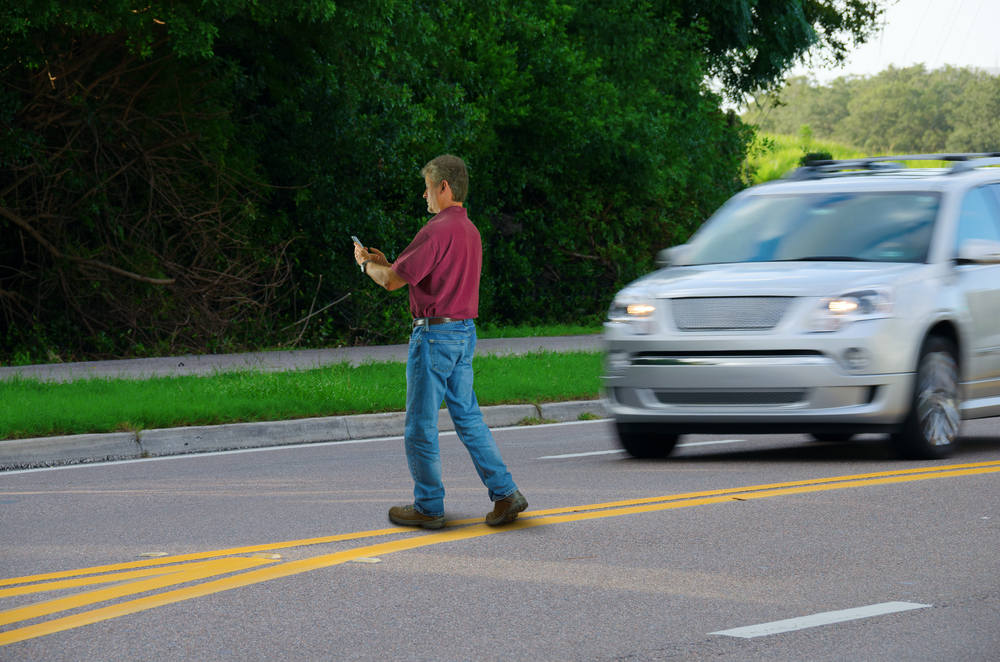
Groups like Circulate San Diego and city planners conduct walking audits where they physically walk the streets to list hazards like poor lighting, faded crosswalks, signals that don't give pedestrians enough time to cross, or blind corners.
These audits produce reports that serve as formal notice to the city that a problem exists.
What Is Constructive Notice, and How Do We Use Audits to Prove It?
There is a legal concept called constructive notice. Simply put, you generally cannot sue the government just because a road is dangerous. However, that immunity can crack if the government knew the road was dangerous and didn't fix it within a reasonable time.
If an OTS-funded audit identified your intersection as high-risk in 2024, and the city failed to implement the recommended changes by the time of your accident, that audit might become evidence of negligence. It moves the argument from "accidents happen" to "this accident was predicted but ignored."
FAQ for San Diego Pedestrian Safety Operations
Do these safety operations mean the city is liable for my accident?
Not automatically. Government liability is complicated and requires overcoming "sovereign immunity." However, if the operation was based on a specific audit that proved the road was defective—and the city ignored those findings for an unreasonable amount of time—it creates a potential avenue for a government claim. The audit serves as proof they had notice of the danger.
Can I get footage from a red light camera for my injury case?
Yes, but you must act fast. California law requires the destruction of non-citation evidence within strict timeframes—typically 5 days for footage where no violation was issued. We send preservation letters immediately to stop this destruction. If you wait weeks to hire a lawyer, that camera footage is likely gone forever.
What if the police report says I was at fault, but the intersection is known for being dangerous?
Police reports are important, but they are not the final verdict in civil claims. Officers are human and can make mistakes at the scene. We investigate the intersection's history independently. If Vision Zero data shows frequent crashes there despite enforcement, it supports the argument that infrastructure or confused drivers, not your behavior, were the true cause.
How do the new civil penalty laws (SB 720) affect my driver's liability?
A civil penalty (ticket) issued to a driver is evidence of a violation. Even if they are not criminally charged or do not receive points on their license, the official record of the infraction supports your claim. It helps establish that they breached their duty of care to operate the vehicle safely.
Is jaywalking still illegal during these enforcement waves?
Technically, the Freedom to Walk Act allows crossing outside crosswalks if safe. You cannot be ticketed solely for crossing mid-block unless there is an immediate hazard of a collision.
However, if an enforcement operation is targeting "unsafe" crossings, officers have discretion to decide what is unsafe. In a civil case, the key is whether your crossing actually created an immediate hazard. We fight to prove that your actions were reasonable under the new law.
Enforcement Data Is Just the Starting Point for Your Claim

San Diego's investment in safety operations proves one thing: the authorities know that drivers are frequently failing to protect pedestrians and cyclists. The city does not spend half a million dollars enforcing safety in areas where everyone is driving perfectly.
You do not have to accept an insurance adjuster's initial denial, especially when public data supports the fact that the road you were on was a known danger zone. The burden of proof is real, but so is the evidence that the city and state are collecting every day.
We use the same grants, audits, and automated enforcement data that the city uses for planning to build a foundation for your financial recovery. Whether it's proving a pattern of red light running or highlighting ignored infrastructure defects, the evidence exists in public records—if you know where to look.
You have rights, but evidence like camera footage and audit reports can disappear or get buried in bureaucracy. Call Bonnici Law Group today. We will secure the relevant data, analyze the intersection's history, and enforce your right to fair compensation.